
Water Damage Restoration for the City of Toronto, Scoped Honestly
From century-old homes near the Danforth to newer condos and infill builds across the city, we scope restoration around actual moisture readings, not a drive-by guess.
Email Us for a Free Estimate
Water Damage Across Toronto's Very Different Housing Stock
Few regions in the GTA have as much variation in building age and style as the City of Toronto itself, and that variation changes how water damage develops and how it needs to be fixed.
Century homes with fieldstone or brick foundations
Neighbourhoods with housing stock dating back a century or more often have fieldstone or unparged brick foundations that were never designed to modern waterproofing standards, meaning groundwater intrusion during heavy rain is a recurring issue rather than a one-time event.
Semi-detached homes with shared foundation walls
Toronto's dense stock of semi-detached and rowhouse construction means water damage on one side of a shared wall can be influenced by drainage or grading issues on the neighbouring property, which adds a layer of complexity to diagnosing the source.
Basement apartments and finished lower levels
Many Toronto homes have finished basement apartments, which means water damage isn't just a storage inconvenience, it's a livable space with drywall, flooring, and belongings that need a faster, more thorough response.
Newer condo and infill construction
Newer builds and infill developments across the city bring different failure points, like plumbing stack leaks or window seal failures in taller structures, which behave differently than the groundwater issues common in older housing.
One-Size Quotes Don't Work Across Toronto's Mixed Housing Stock
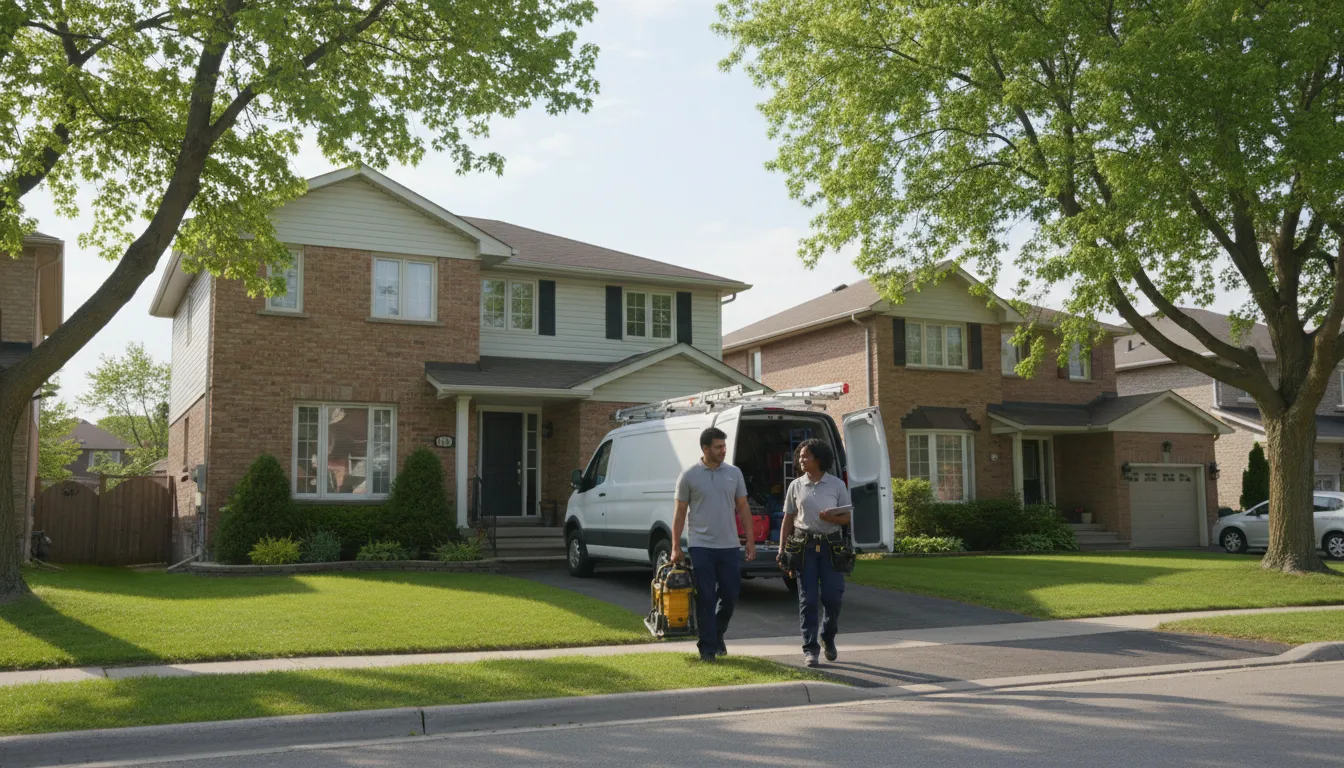
A contractor quoting water damage restoration the same way for a century-old fieldstone foundation home and a five-year-old infill build is missing something important about both. Older foundations often need broader moisture checks given how groundwater travels through stone and mortar, while newer builds may have more contained, source-specific leaks. Treating them identically means either over-scoping the newer home or under-scoping the older one.
We Scope to the Building, Not a City-Wide Template
Our assessment always starts with identifying what kind of construction we're dealing with, foundation material, age, and layout, before taking moisture readings. That context shapes where we check and how we interpret the readings, so your quote reflects your specific home rather than a generic Toronto template.
Why Toronto Homeowners Choose Our Approach
Restoration across such varied housing stock requires flexibility built on a consistent standard.
Construction-specific assessment
We identify foundation type and building era before scoping the moisture check.
Shared-wall awareness
We consider neighbouring property drainage issues in semi-detached and rowhouse cases.
Fast response for finished basement units
We prioritize livable finished basements given the higher impact of water damage there.
Moisture-verified scopes
Every quote is backed by an actual reading, not a visual estimate.
Insurance-ready documentation
Reports formatted for adjusters regardless of building type.
Honest salvage guidance
We tell you what can be dried and saved versus what genuinely needs replacing.
Our Process for Toronto Properties
The steps stay consistent, but how we apply them adapts to your specific building.
- 1
Email us your situation
Tell us about your property type and what you're seeing, so we can prepare appropriately for the visit.
- 2
Construction-informed assessment
We identify foundation type, age, and layout before taking moisture readings, since that context shapes where we check.
- 3
Moisture mapping
We measure how far water has travelled across affected walls, floors, or framing based on your specific construction.
- 4
Written, itemized scope
You receive a quote that reflects your building type and the actual readings taken, not a generic city-wide rate.
- 5
Extraction, drying, and verification
We complete the restoration work and confirm with final readings before considering the job done.
Common Causes of Water Damage Across Toronto
The causes we see vary significantly by neighbourhood age and construction type across the city.
Fieldstone and unparged foundation seepage
Common in century homes, where groundwater migrates through stone and mortar joints during heavy or prolonged rain.
Aging sewer and storm lateral connections
Older infrastructure in established neighbourhoods can back up or fail during high-volume storm events.
Shared drainage issues on semi-detached lots
Grading or drainage problems on one side of a shared property line can affect the neighbouring foundation.
Basement apartment flooring and drywall damage
Finished lower-level units see faster, more visible damage since they're actively lived in rather than used for storage.
Plumbing stack leaks in taller infill and condo construction
Multi-storey builds introduce vertical plumbing runs that can leak into units below when a stack connection fails.
Window seal failures in newer construction
Newer builds and infill projects can develop water intrusion through failed window seals rather than foundation-level issues.
Ice damming on older, less-insulated rooflines
Older Toronto homes with less attic insulation are more prone to ice damming during freeze-thaw cycling.
Overwhelmed storm drainage during intense rainfall
Dense urban lots with limited green space can see faster surface water accumulation during heavy downpours.
Water Damage Questions for Toronto Homeowners
Do you service all Toronto neighbourhoods?
Yes, we cover the City of Toronto broadly, from older established neighbourhoods to newer infill and condo developments. Email us your address and we'll confirm coverage and response timing.
Is water damage in a century home harder to fix than in a newer build?
It's different, not necessarily harder. Older fieldstone or brick foundations require broader moisture checks since groundwater travels differently through stone and mortar, but the underlying restoration principles, extraction, drying, verification, still apply.
My basement apartment tenant reported water damage. How fast can you respond?
We prioritize finished, livable basement spaces given the higher impact of water damage on daily life. Email us the details and we'll move quickly to assess.
Can water damage on my side of a semi-detached home be caused by my neighbour's property?
It's possible, particularly with drainage or grading issues along a shared property line. We look at the broader context during assessment, not just your side of the wall, to help identify the actual source.
Do condo unit water damage claims work differently?
Often yes, since condo corporations may have separate responsibility for certain building elements. We document the damage thoroughly so you have clear information for whatever conversation you need to have with your condo corporation or insurer.
5 regions across the GTA
Communities We Serve in City of Toronto
City of Toronto is highlighted below — every community has its own local page, and we cover the rest of the GTA too.
Get a Toronto-Specific Water Damage Quote
Email us your property details and we'll scope restoration around your specific building, not a generic city rate.
Email Us for a Free EstimateProudly Serving City of Toronto, ON
Local, on-time service throughout City of Toronto and the surrounding area.