
Structural Drying That's Sized to the Reading, Not the Room
Renting a stack of fans and calling it drying is how homes end up with hidden dampness for months. We place equipment based on moisture readings and verify before we pull it out.
Email Us for a Free Estimate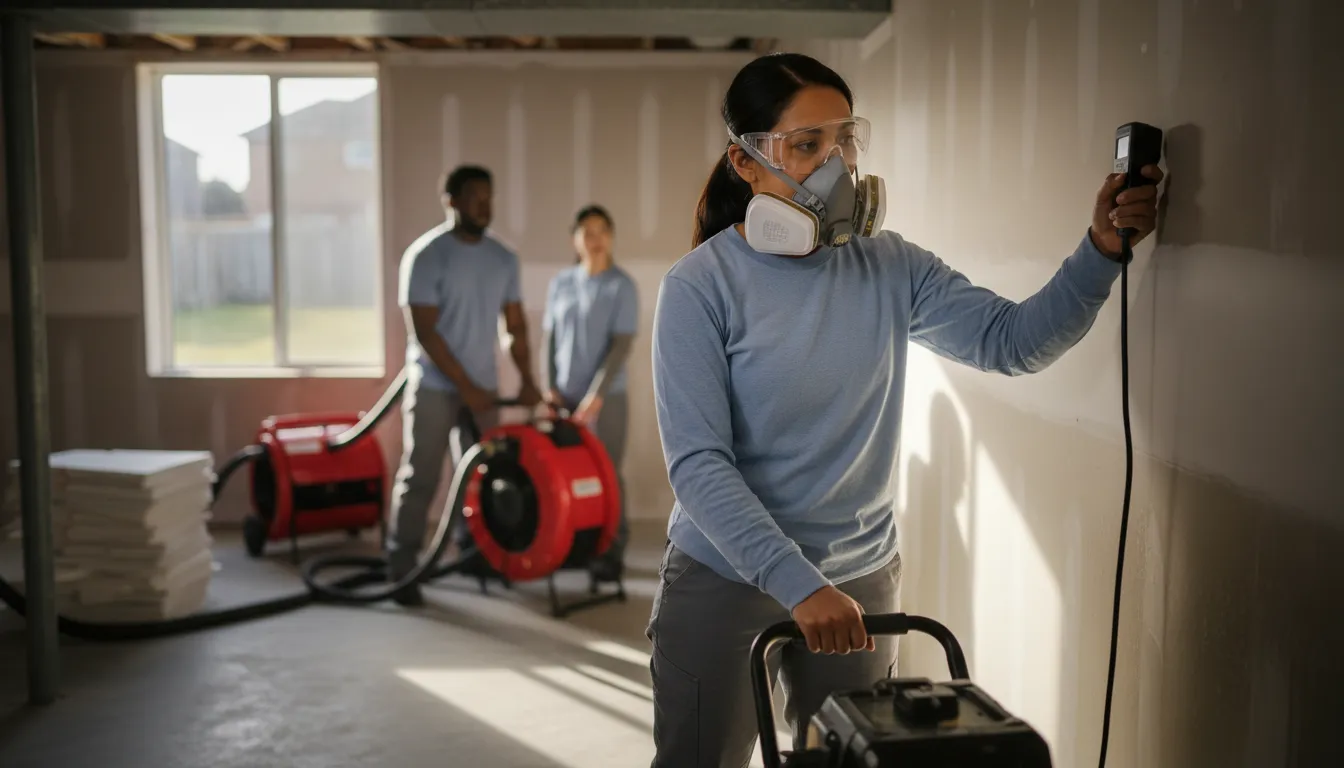
Why Structural Drying Needs to Match the Building, Not a Rental Schedule
The most common shortcut in this industry is billing drying equipment by the day regardless of what's actually happening inside the walls. In Vaughan's mix of housing stock, the right drying setup depends heavily on what materials are involved.
Poured concrete foundations dry slowly
Older Vaughan basements with poured concrete foundation walls hold moisture longer than newer materials, meaning a drying job that looks finished on the surface can still have elevated readings deeper in the concrete for days longer than expected.
Insulated wall cavities trap humidity
Newer builds with well-insulated wall cavities can actually trap humidity inside the cavity if drying airflow isn't directed properly, which is why simply running a dehumidifier in the room isn't always enough.
Engineered subfloor systems need targeted airflow
Subfloor systems common in newer subdivisions often need directed air movers along the seams to dry effectively, rather than general room dehumidification that doesn't reach under flooring.
Winter humidity swings complicate readings
Ontario's dry winter indoor air can make a space feel and even test dry on the surface while deeper materials remain wet, which is why we take multiple readings over the drying period rather than relying on one visit.
Cheap Drying Quotes Bill by the Day, Not by the Result
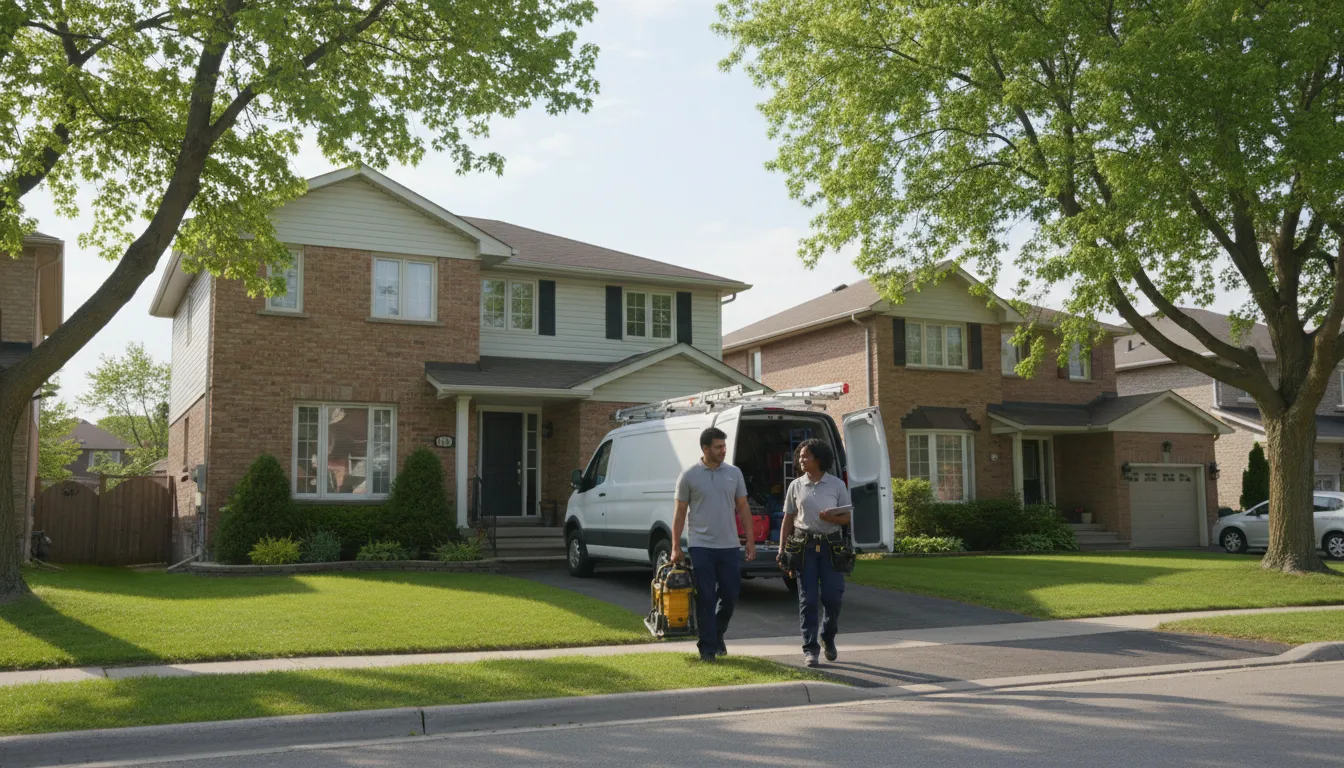
A lot of structural drying is quoted as a flat daily equipment rental fee, with no clear end point tied to actual moisture levels. That setup gives the contractor no incentive to finish efficiently, and it gives you no way to know whether the job is actually done or just scheduled to stop. Homeowners often end up paying for extra rental days on equipment that was placed wrong from the start.
We Quote Drying Against a Moisture Target, Not a Calendar
Our structural drying scope is built around reaching a specific, verified moisture level in the affected materials, and we check readings throughout the process rather than waiting until the end. If drying is going faster than expected, equipment comes out sooner. If a material needs longer, you'll see that in the readings, not just be told to trust us.
Our Structural Drying Process
Effective drying is a monitored process, not a set-and-forget equipment rental.
- 1
Initial moisture assessment
We take baseline readings across affected drywall, subfloor, and framing to understand what we're actually drying.
- 2
Equipment sized to the reading
Air movers and dehumidifiers are placed and sized based on the affected area and material type, not a standard room-count formula.
- 3
Mid-process monitoring
We return to check readings during the drying period, adjusting equipment placement if certain areas are drying slower than others.
- 4
Verification against target levels
We compare readings to safe moisture benchmarks for each material before considering any area complete.
- 5
Equipment removal and sign-off
Drying equipment comes out once readings confirm the target is met, and we walk you through the final numbers.
Why Our Drying Process Doesn't Waste Your Time or Money
Structural drying is where the biggest gap between cheap and honest quoting shows up. Here's how we close that gap.
Moisture-target completion
Drying ends when readings hit a safe level, not on a pre-set number of rental days.
Mid-process readings
We check progress during drying, not just at the start and end.
Material-specific placement
Equipment is sized and directed based on what's actually wet, concrete, subfloor, or wall cavity.
No flat daily equipment billing
You're quoted against the drying target, not charged for extra days by default.
Written readings at every stage
You see the numbers, not just a verbal 'it's drying fine.'
Seasonal humidity awareness
We account for Ontario's winter dry-air swings that can mask deeper moisture.
Structural Drying Questions
How long does structural drying usually take?
It depends entirely on the materials and how far moisture has travelled. A contained drywall and baseboard area might reach safe levels in three to five days, while concrete or engineered subfloor can take longer. We give you a target based on your actual readings rather than a generic estimate.
How do I know when structural drying is actually finished?
We compare moisture meter readings against safe benchmarks for each material type, and we show you those numbers directly. It's finished when the readings confirm it, not when a scheduled number of days runs out.
Can I just run my own dehumidifier instead of hiring a structural drying service?
For minor, contained situations, a household dehumidifier can help, but structural drying after real water damage usually requires directed airflow and monitoring that household equipment isn't designed for, especially for anything that's soaked into subfloor or wall cavities.
Does structural drying damage my walls or flooring?
Properly placed drying equipment doesn't damage materials, and the goal is specifically to avoid the damage that comes from leaving materials wet too long. In some cases small drywall cuts are needed to dry a wall cavity directly, which we'll explain before doing.
Why did my last contractor's drying equipment run for so long?
Often because it was billed by the day rather than tied to a moisture target, which removes any incentive to finish efficiently or to check whether it's actually still needed. That's exactly the gap we built our drying process to close.
Get a Drying Quote Tied to a Real Target
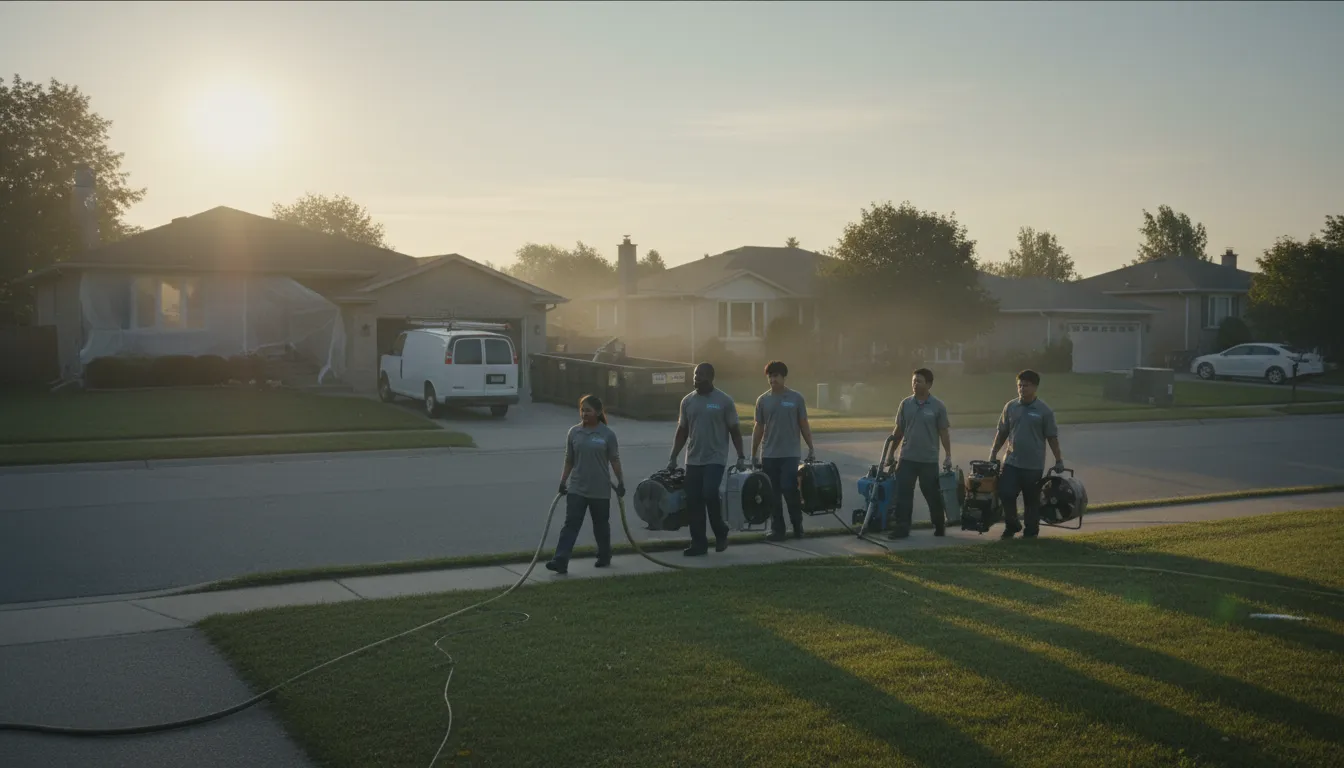
Email us your situation and we'll scope structural drying against moisture readings, not a flat rental schedule.
Email Us for a Free EstimateWeather drives water-damage risk — email us if you find water.
Summer water-damage conditions in Vaughan, ON
Summer storms and high humidity around Vaughan, ON drive flash flooding, roof leaks, and the warm, damp conditions mold needs to spread fast — water damage should be dried out within 24–48 hours.
Proudly Serving Vaughan, ON
Local, on-time service throughout Vaughan and the surrounding area.