
Emergency Water Mitigation: Stop the Spread Before It Becomes a Rebuild
Mitigation is the difference between a wet carpet and a gutted basement. We prioritize the first hours because that's where the real cost is decided.
Email Us for a Free Estimate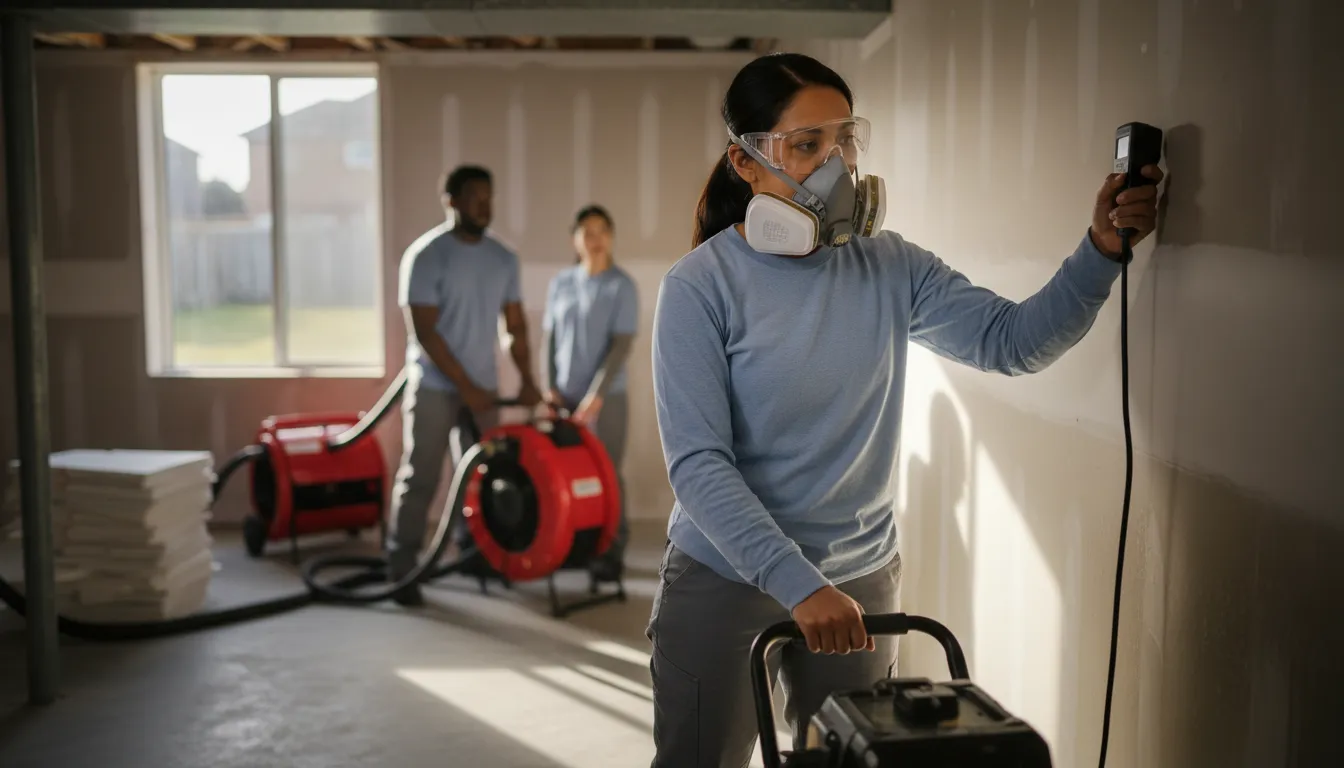
Why the First 24 Hours Decide the Whole Job
Water mitigation isn't a marketing term for 'we showed up.' It's the specific work of containing water before it migrates into materials that are expensive to replace, and in Vaughan's housing stock, that migration happens faster than most homeowners expect.
Drywall wicks water upward fast
Standard drywall pulls moisture upward through capillary action within hours, which is why a puddle that looks contained to the floor can already be climbing the wall behind your baseboard by the time you call.
Subfloor swelling starts early
Engineered hardwood and laminate subfloors common in GTA new builds begin swelling within 24 to 48 hours of sustained moisture exposure, and once that swelling sets in, sanding it flat again usually isn't an option.
Older homes hide water in wall cavities
In Vaughan homes built before modern vapour barrier requirements, water can travel sideways inside a wall cavity well past where it entered, which is exactly why mitigation includes moisture mapping, not just towel-drying the visible area.
Delayed mitigation invites secondary damage
Every day water sits is another day of risk for warping, delamination, and the kind of hidden dampness that turns into a mould conversation two weeks later instead of a drying conversation today.
Cheap Mitigation Quotes Skip the Extraction Depth Check
A rushed mitigation call often means a shop-vac pass over the visible puddle and a few fans left running, billed as 'mitigation complete.' What it usually misses is how deep the water actually sat before anyone arrived, and whether it's already saturated the subfloor or wall cavity below the surface. Homeowners find out three weeks later when the smell comes back or the baseboard starts to bow, and by then it's a demo job instead of a drying job.
We Check Depth and Spread Before We Call It Contained
Our mitigation process includes a moisture reading at multiple points, not just the spot where water is visibly pooling. That tells us whether extraction alone will handle it or whether targeted drying equipment needs to go in immediately. You get that reading in writing, so the scope for containment matches what's actually happening below the surface, not just what's visible when we walk in.
Our Emergency Mitigation Process
Mitigation is about speed and sequence. Here's the order we work in and why it matters.
- 1
Immediate email response
Send us what's happening and we'll confirm a response window right away. For active water events, we move quickly to get someone assessing the situation.
- 2
Contain the source
Where possible, we help identify and stop the ongoing source, whether that's a failed sump pump, a supply line, or storm intrusion, before mitigation work starts.
- 3
Extract standing water
We remove standing water from floors and low points first, since that's the volume most likely to keep spreading if left.
- 4
Moisture-map the spread
We check drywall, baseboards, and subfloor at multiple points to see how far the water has actually travelled, not just where it's visible.
- 5
Deploy targeted drying
Air movers and dehumidifiers go exactly where the readings say they're needed, sized to the affected area rather than a blanket setup.
What Makes Our Mitigation Different
Mitigation is often treated as a quick add-on before the 'real' restoration work. We treat it as the step that determines how big the real work needs to be.
Depth-checked extraction
We confirm how far water has soaked before declaring an area contained, not after.
No blanket fan setups
Drying equipment is placed based on moisture readings, sized to the actual wet zone.
Priority for active water
Ongoing leaks and active flooding get moved ahead of routine scheduling.
Written moisture logs
You get the readings in writing, useful for both your own records and any insurance claim.
GTA housing stock familiarity
We scope mitigation differently for a 1990s slab foundation versus a new-build subfloor system.
Honest containment calls
If mitigation alone won't solve it, we tell you that upfront instead of billing a fix that won't hold.
Emergency Mitigation Questions
What counts as an emergency mitigation situation?
Active water intrusion, a burst pipe, sump pump failure, or storm water entering the home all qualify. If water is still moving or accumulating when you contact us, treat it as an emergency and email us the details right away.
How is mitigation different from full restoration?
Mitigation is the immediate work of stopping the spread and extracting water to prevent further damage. Restoration is the broader repair work that follows, like replacing drywall or flooring. Sometimes mitigation alone resolves a small event, but bigger jobs need both.
Can mitigation happen before my insurance adjuster sees the damage?
Yes, and in most cases it should. Insurers generally expect homeowners to take reasonable steps to prevent further damage. We document moisture readings and photos as we go, so the record is there for your adjuster even if mitigation starts before they arrive.
Will mitigation stop mould from developing?
Fast, thorough mitigation significantly reduces that risk because mould needs sustained moisture to establish. That's exactly why we check moisture depth rather than just drying the visible surface, since hidden dampness left behind is the most common way mould gets a foothold.
Do you work with sump pump failures common in Vaughan basements?
Yes, sump pump failure during spring thaw or heavy rain is one of the most common mitigation calls we get in this area. We assess both the water damage and, where relevant, note what likely caused the failure so you can address it going forward.
Active Water Event? Email Us Now
Describe what's happening and we'll confirm next steps and a response window quickly.
Email Us for a Free EstimateWeather drives water-damage risk — email us if you find water.
Summer water-damage conditions in Vaughan, ON
Summer storms and high humidity around Vaughan, ON drive flash flooding, roof leaks, and the warm, damp conditions mold needs to spread fast — water damage should be dried out within 24–48 hours.
Proudly Serving Vaughan, ON
Local, on-time service throughout Vaughan and the surrounding area.