
Water Extraction: The Step That Determines Everything After It
Extraction that stops too early leaves moisture behind that shows up as a bigger problem later. We extract to a verified level, not just until the floor looks dry.
Email Us for a Free Estimate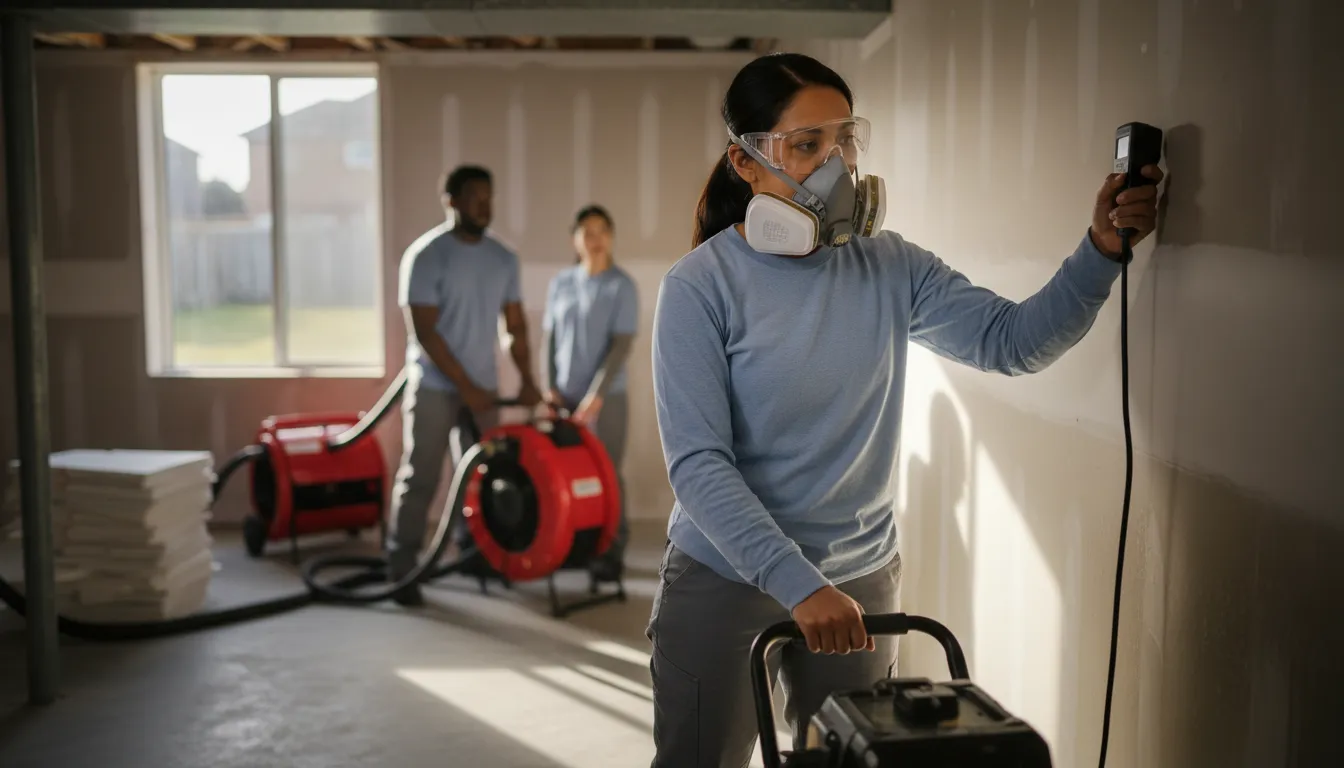
Why Water Extraction in Vaughan Homes Isn't a One-Size Job
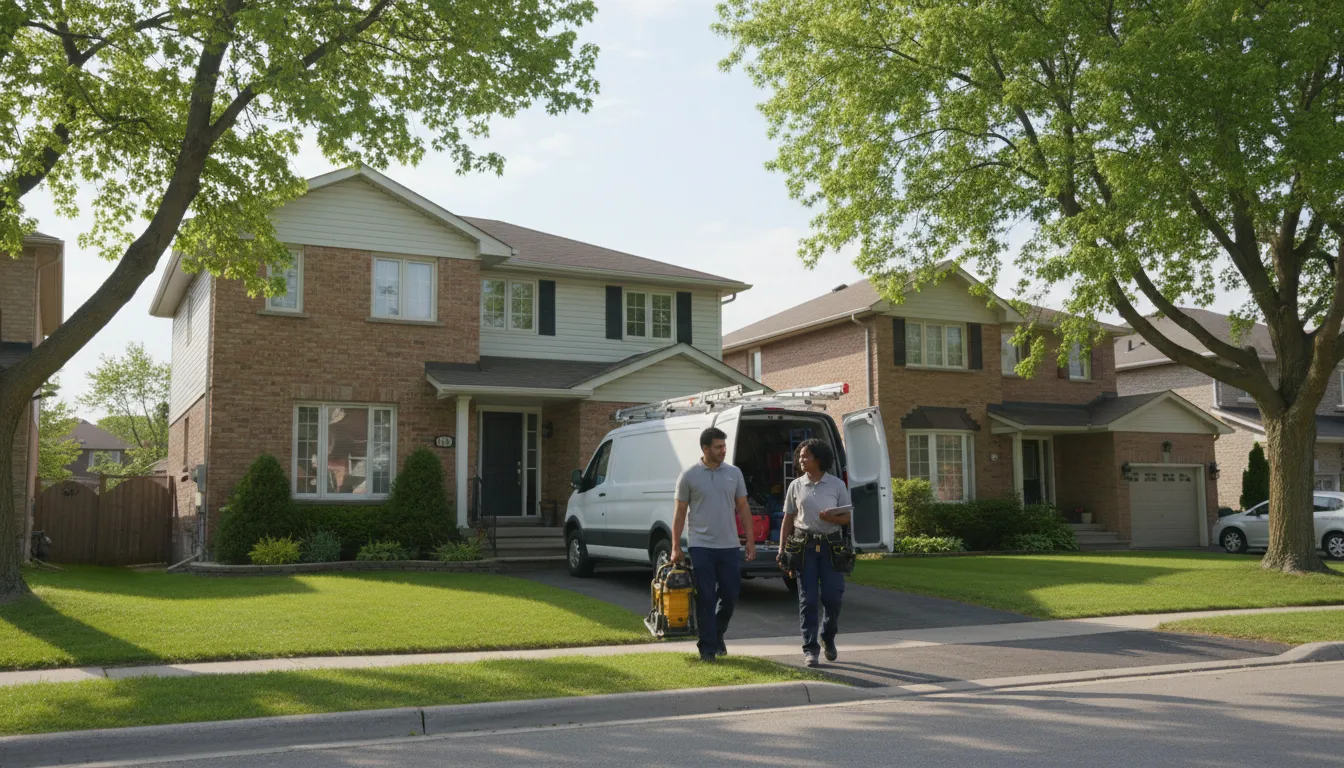
Extraction sounds simple, remove the standing water, but how thoroughly it needs to be done depends heavily on flooring type and how the home was built.
Carpet and underpad hold water differently
In finished basements common across Vaughan subdivisions, carpet can look extracted while the underpad underneath remains saturated, which is why proper extraction includes checking underpad separately rather than treating it as one surface.
Concrete slab basements absorb slowly
Older poured concrete basements, common in homes built before the 1990s, absorb water into the slab itself, meaning surface extraction can look complete while the concrete continues releasing moisture into the air for days.
Engineered flooring needs fast, careful extraction
Newer builds with engineered hardwood or laminate need extraction done quickly and carefully, since standing water left even a few hours too long can cause swelling that extraction alone can't reverse.
Crawl spaces are easy to under-extract
Some Vaughan homes have crawl space areas that are harder to access and easy to under-extract if a contractor isn't checking corners and low points carefully, leaving pockets of standing water behind insulation or vapour barrier.
Cheap Extraction Quotes Stop at 'Floor Looks Dry'
The fastest way to finish an extraction job is to stop once the floor surface looks and feels dry to the touch. That's often well before the underpad, subfloor, or concrete slab beneath has actually released its moisture, and it's the single most common reason a 'completed' extraction job turns into a mould conversation a few weeks later.
We Extract Until the Reading Confirms It, Not the Eye
Our extraction process includes checking moisture below the visible surface, in underpad, subfloor, and slab, before calling extraction complete. If the surface looks dry but the reading says otherwise, extraction continues or structural drying picks up immediately, and either way you'll see the number that made that call.
Our Water Extraction Process
Extraction is the first physical step after water enters your home, and it sets up everything that follows.
- 1
Email us the situation
Tell us where the water is and what's affected, floors, basement, crawl space, so we can bring the right extraction equipment.
- 2
Standing water removal
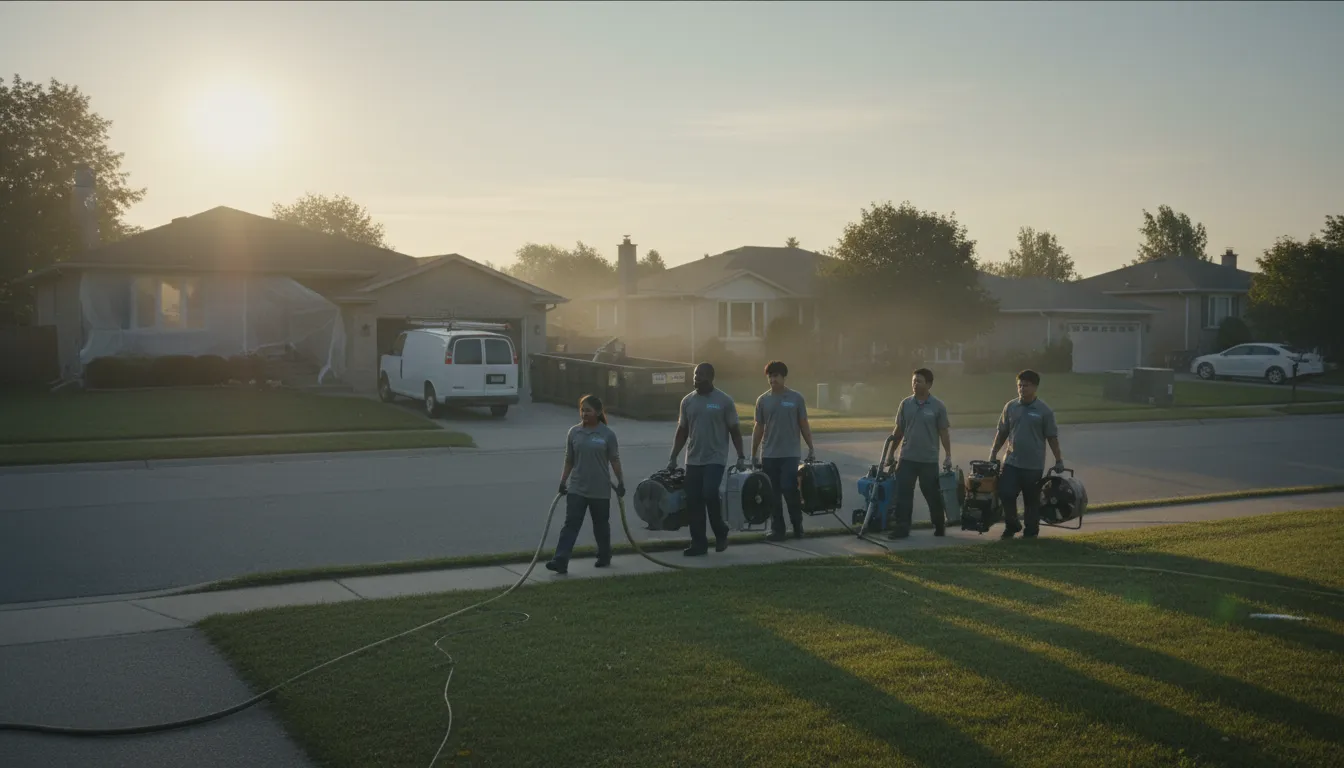
We remove standing water using truck-mount or portable extraction equipment sized to the volume involved.
- 3
Sub-surface moisture check
We check underpad, subfloor, or slab moisture levels rather than assuming the visible surface tells the whole story.
- 4
Secondary extraction where needed
If readings show moisture below the surface, we extract further or transition directly into structural drying.
- 5
Handoff to drying or restoration
Once extraction is verified complete, we scope whatever structural drying or restoration work follows, based on the same readings.
Why Our Extraction Doesn't Stop Too Early
Extraction is easy to rush because it's the most visually satisfying step to finish. We don't let that visual satisfaction replace an actual reading.
Sub-surface verification
We check underpad, subfloor, and slab moisture, not just the visible surface.
Right equipment for the volume
Truck-mount extraction for larger events, portable units where access is limited.
Seamless handoff to drying
Extraction and structural drying are scoped together, not as disconnected line items.
Crawl space thoroughness
We check corners and low points that are easy to under-extract in tighter spaces.
Written moisture confirmation
You see the reading that confirmed extraction was actually complete.
No premature sign-off
We don't call it done because the floor looks dry to the eye.
Water Extraction Questions
How do I know if extraction alone is enough, or if I need drying too?
It depends on how much water was involved and how long it sat before extraction. Minor, quickly addressed events sometimes only need extraction, while anything that sat for hours or soaked into subfloor typically needs structural drying to follow. We'll tell you honestly which situation you're in based on the readings.
Can extraction save carpet that's been flooded?
Sometimes the carpet itself can be saved, but the underpad underneath usually can't, since it holds water like a sponge and rarely dries fully in place. We check both separately rather than assuming one tells you about the other.
How fast do you respond for water extraction in Vaughan?
We prioritize active standing water situations and aim to respond quickly, since the volume and depth of water only get harder to manage the longer it sits. Email us the details and we'll confirm a response window.
Does extraction address the smell after a flood?
Extraction removes the standing water that's usually the main source of odour, but lingering smell after extraction can indicate moisture still trapped in underpad, subfloor, or wall cavities, which is why we check those areas rather than stopping once the surface looks dry.
What equipment do you use for water extraction?
We use truck-mount extraction for larger volumes of standing water and portable extraction units for tighter spaces like crawl spaces, sized appropriately to the situation rather than a one-size approach for every job.
Get Extraction That's Verified, Not Just Visual
Email us the details and we'll extract to a confirmed moisture level, not just until the floor looks dry.
Email Us for a Free EstimateWeather drives water-damage risk — email us if you find water.
Summer water-damage conditions in Vaughan, ON
Summer storms and high humidity around Vaughan, ON drive flash flooding, roof leaks, and the warm, damp conditions mold needs to spread fast — water damage should be dried out within 24–48 hours.
Proudly Serving Vaughan, ON
Local, on-time service throughout Vaughan and the surrounding area.