
Storm Damage Restoration Scoped to What Ontario Weather Actually Does
Ice damming, wind-driven rain, and lake-effect downpours each cause different kinds of water intrusion. We scope your restoration to the storm that actually hit your house.
Email Us for a Free Estimate
How GTA Storms Actually Get Water Into a House
Storm damage restoration only works if you correctly identify how the water got in, and that varies a lot between a January ice dam and a July thunderstorm.
Ice damming along roof edges
Vaughan winters bring the freeze-thaw cycling that creates ice dams: heat escaping the attic melts snow near the ridge, which refreezes at the colder eave, building a dam that forces meltwater back under the shingles and into the attic or exterior walls.
Wind-driven rain through aging flashing
Summer storms with strong wind can drive rain sideways under flashing that's otherwise fine in normal conditions, especially around chimneys and roof valleys on older Vaughan homes where flashing hasn't been updated in years.
Overwhelmed eavestroughs and downspouts
Heavy, fast summer downpours common to this region can overwhelm eavestroughs faster than they drain, sending water over the edge and down the foundation wall instead of away from the house through the downspout as intended.
Grading and window well failures during storms
A storm doesn't have to be severe to cause damage if the grading around a home has settled toward the foundation or a window well liner has degraded, both common issues in subdivisions now fifteen to thirty years old.
Cheap Storm Restoration Quotes Treat the Symptom, Not the Entry Point
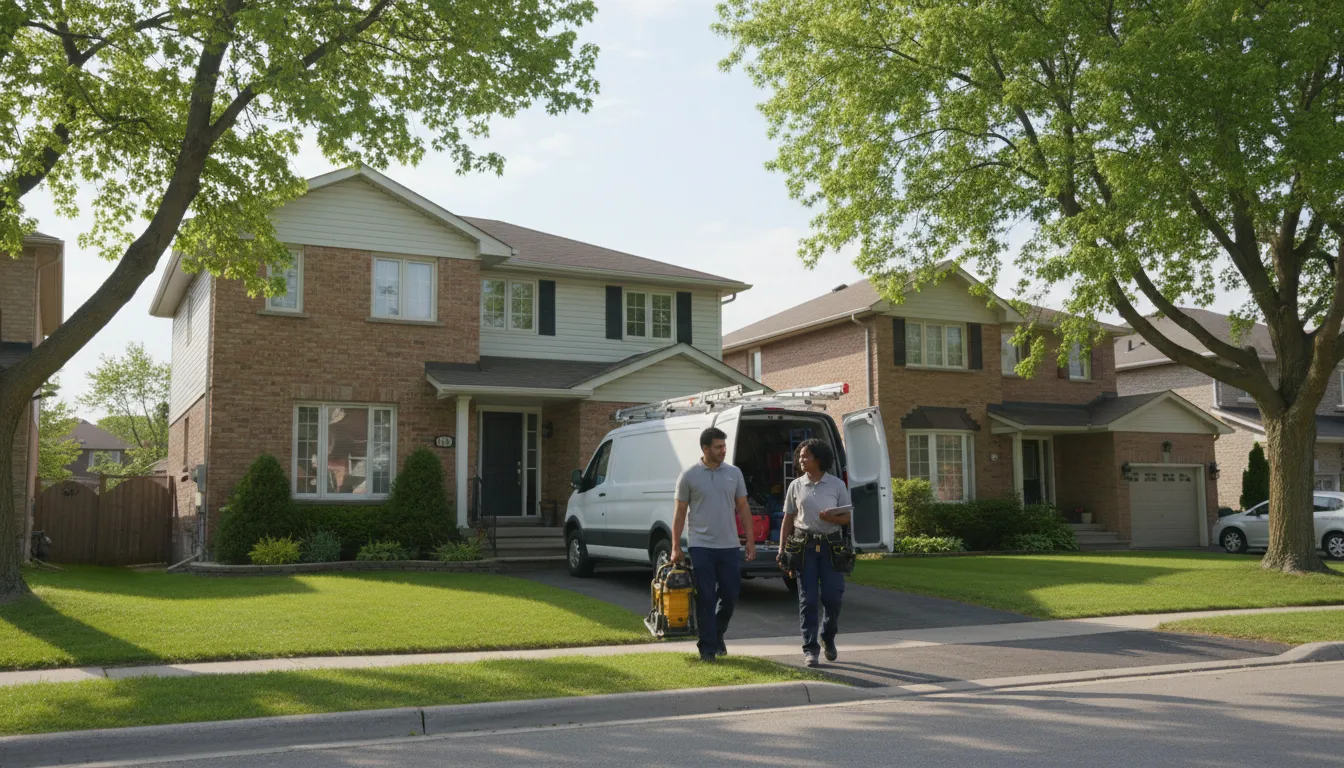
It's common to see a quote that dries out the visible water stain from a storm without ever confirming where the water actually got in. If the entry point isn't identified, whether it's an ice dam, failed flashing, or an eavestrough issue, the same damage often comes back with the next storm, and you're paying for the same drying work twice.
We Trace the Entry Point Before We Quote the Repair
Our storm restoration process includes identifying how water actually entered the structure, not just addressing where it ended up. That means your quote reflects both the interior restoration and, where relevant, a clear explanation of what exterior issue needs attention so the same storm doesn't cause the same damage again.
Our Storm Damage Restoration Process
Storm damage restoration works backward from the water's path, not forward from the visible stain.
- 1
Email us the storm details
Tell us when the storm hit and where you're seeing water or damage, so we can prioritize based on how active the intrusion still is.
- 2
Entry point assessment
We trace how water actually got into the structure, checking roofline, flashing, grading, and window wells as relevant.
- 3
Moisture mapping of affected areas
We check how far the water has travelled into drywall, insulation, or framing before scoping the restoration work.
- 4
Extraction and material removal
Water is removed and any damaged materials that can't be reasonably dried are pulled out.
- 5
Structural drying and verification
Drying equipment runs until moisture readings confirm the affected materials are back to a safe level.
Why Our Storm Restoration Scope Holds Up
A storm restoration job that doesn't identify the entry point is a temporary fix wearing a permanent invoice. Here's how we avoid that.
Entry point tracing
We identify how water got in, not just where it pooled, before scoping any repair.
Seasonal expertise
We scope ice damming differently than wind-driven summer rain, because the causes and fixes differ.
Moisture-verified drying
Drying continues until readings confirm the material is safe, not until it looks dry.
Fast post-storm response
We prioritize active intrusion during and immediately after storm events across the GTA.
Local building era knowledge
We know how older Vaughan flashing and roofing details differ from newer subdivision builds.
Insurance-formatted documentation
Photos and moisture logs organized the way storm damage claims typically require.
Storm Damage Restoration Questions
How do I know if my water damage is from an ice dam?
Ice dam damage typically shows up as staining along the ceiling near an exterior wall or around a roofline, often appearing during or shortly after a thaw following a cold snap. If you're seeing that pattern in winter or early spring, ice damming is a likely cause worth checking.
Does storm damage restoration include exterior repairs like flashing or eavestroughs?
We focus on the interior water damage restoration, but as part of tracing the entry point, we'll identify exterior issues like failed flashing or overwhelmed eavestroughs so you know what needs separate attention to prevent a repeat.
Is storm damage usually covered by home insurance in Ontario?
Sudden storm-related water intrusion is often covered, though coverage details vary by policy and whether the damage is considered sudden versus gradual. We document the storm event and resulting damage clearly to support whatever claim conversation you need to have.
How fast does storm damage need to be addressed?
As soon as it's safe to do so. Water from storm intrusion behaves the same as any other water damage once it's inside your home, meaning it spreads into materials the longer it sits, regardless of how it got in.
Can the same storm damage happen again after restoration?
It can, if the entry point that let water in isn't addressed. That's exactly why we trace the entry point as part of restoration, so you know whether there's an exterior issue that needs separate repair to prevent a repeat during the next storm.
Storm Damage? Email Us Before It Spreads Further
We'll trace the entry point and scope the restoration around what actually happened, not just what's visible.
Email Us for a Free EstimateWeather drives water-damage risk — email us if you find water.
Summer water-damage conditions in Vaughan, ON
Summer storms and high humidity around Vaughan, ON drive flash flooding, roof leaks, and the warm, damp conditions mold needs to spread fast — water damage should be dried out within 24–48 hours.
Proudly Serving Vaughan, ON
Local, on-time service throughout Vaughan and the surrounding area.