
Flood Cleanup That Accounts for Where the Water Actually Went
A flooded basement is never just the puddle you can see. We scope the cleanup around moisture readings so nothing gets missed and nothing gets over-charged.
Email Us for a Free Estimate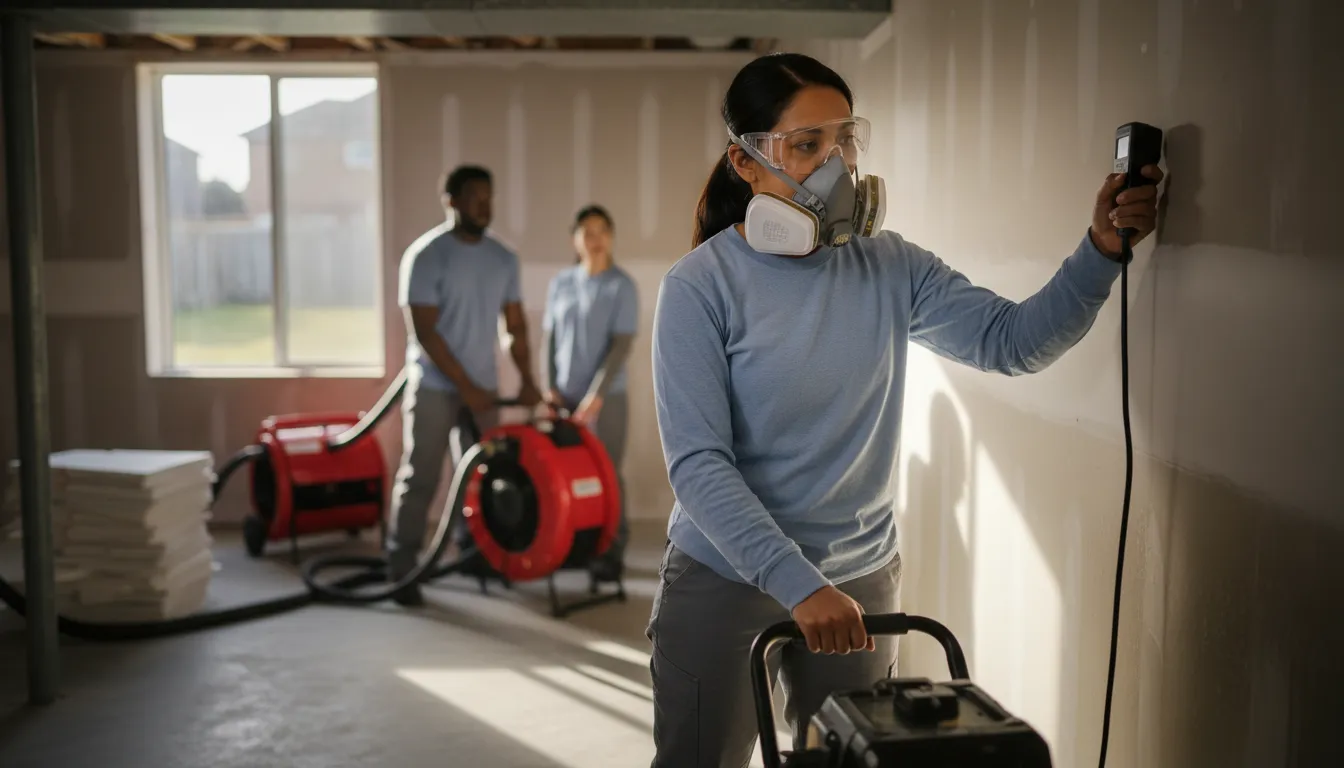
Flood Cleanup Looks Different Across Vaughan's Housing Stock
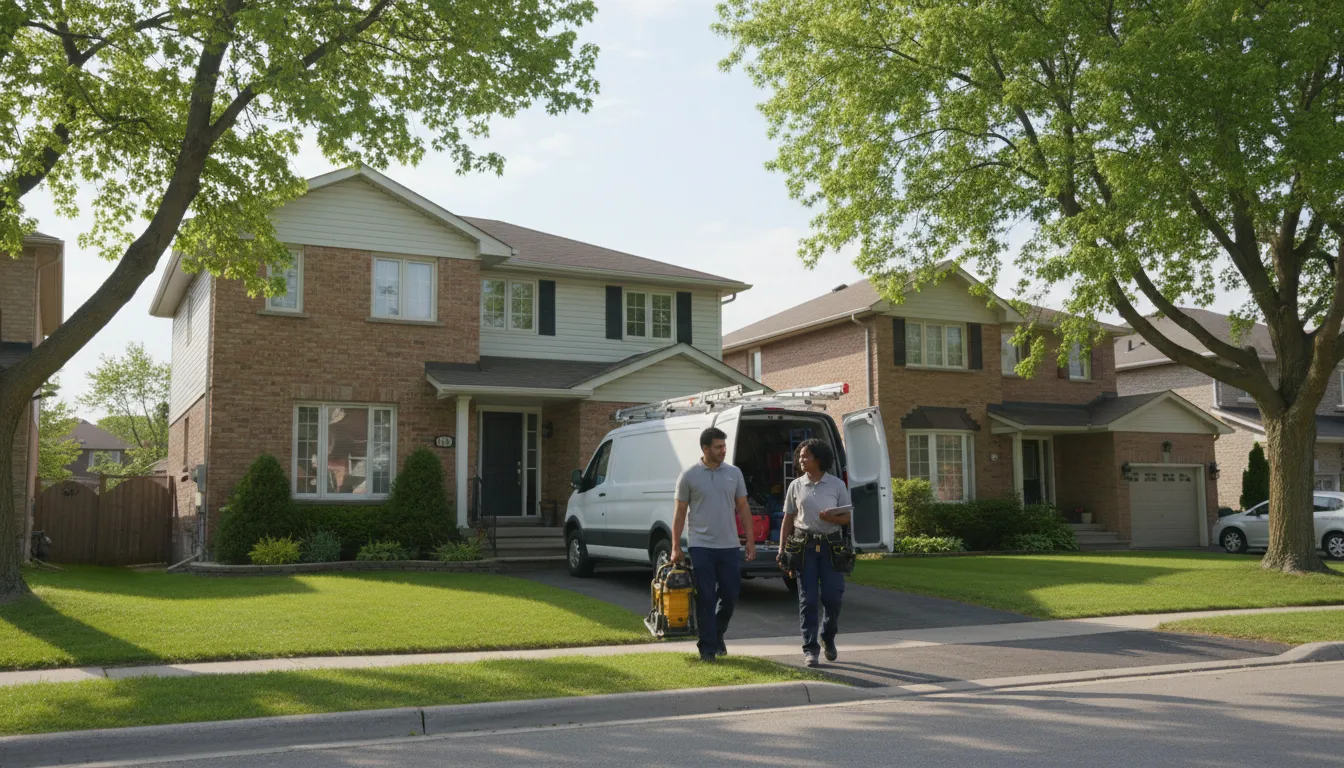
A flood in a 1980s Woodbridge split-level behaves differently than one in a new Kleinburg build, because the materials, foundations, and finishing underneath are different. We scope cleanup around what's actually there.
Older basements with finished drywall over concrete
Many Vaughan homes from the 1980s and 90s have drywall built directly against the foundation wall with minimal air gap, which means a flood event soaks the wall assembly fast and often requires removing drywall higher than the visible waterline to fully dry it out.
Newer builds with engineered flooring
Engineered hardwood and laminate common in newer subdivisions swell and delaminate when flooded, and cleanup has to move quickly to pull affected flooring before it locks moisture underneath the subfloor.
Carpet and underpad in finished basements
Flooded carpet almost always means the underpad is a total loss even when the carpet itself looks salvageable, because underpad holds water like a sponge and rarely dries fully in place.
Storage and personal belongings
Basements in this area are frequently used for storage, and flood cleanup includes sorting what's salvageable from what isn't, which takes real judgment rather than a blanket 'throw it all out' approach.
Cheap Flood Cleanup Quotes Charge for Disposal, Not Drying
Some flood cleanup bids are cheap because they're really just a haul-away job: rip out anything wet, bill for disposal and labour, and skip the structural drying that actually determines whether your basement stays healthy afterward. It looks like a bargain until the framing behind the new drywall never fully dried and you're dealing with a musty smell or a mould inspection six months later.
We Quote Cleanup and Drying as One Connected Job
Our flood cleanup scope always includes the structural drying step, priced against the actual moisture readings in your framing and subfloor, not just the materials we're removing. If something can be dried and saved instead of replaced, we'll tell you, because that's often both cheaper and better for you than a blanket demo.
How We Run a Flood Cleanup Job
From first water contact to final dry reading, here's the sequence.
- 1
Email us the situation
Tell us the source of the flood, roughly how much water, and which areas are affected.
- 2
Extraction and debris removal
We remove standing water and separate salvageable items from those that need to go.
- 3
Moisture assessment
We check walls, subfloor, and framing to determine how far the water has actually travelled before pricing the drying work.
- 4
Cleaning and sanitizing
Affected surfaces are cleaned and treated to address contamination risk from flood water.
- 5
Structural drying to verified levels
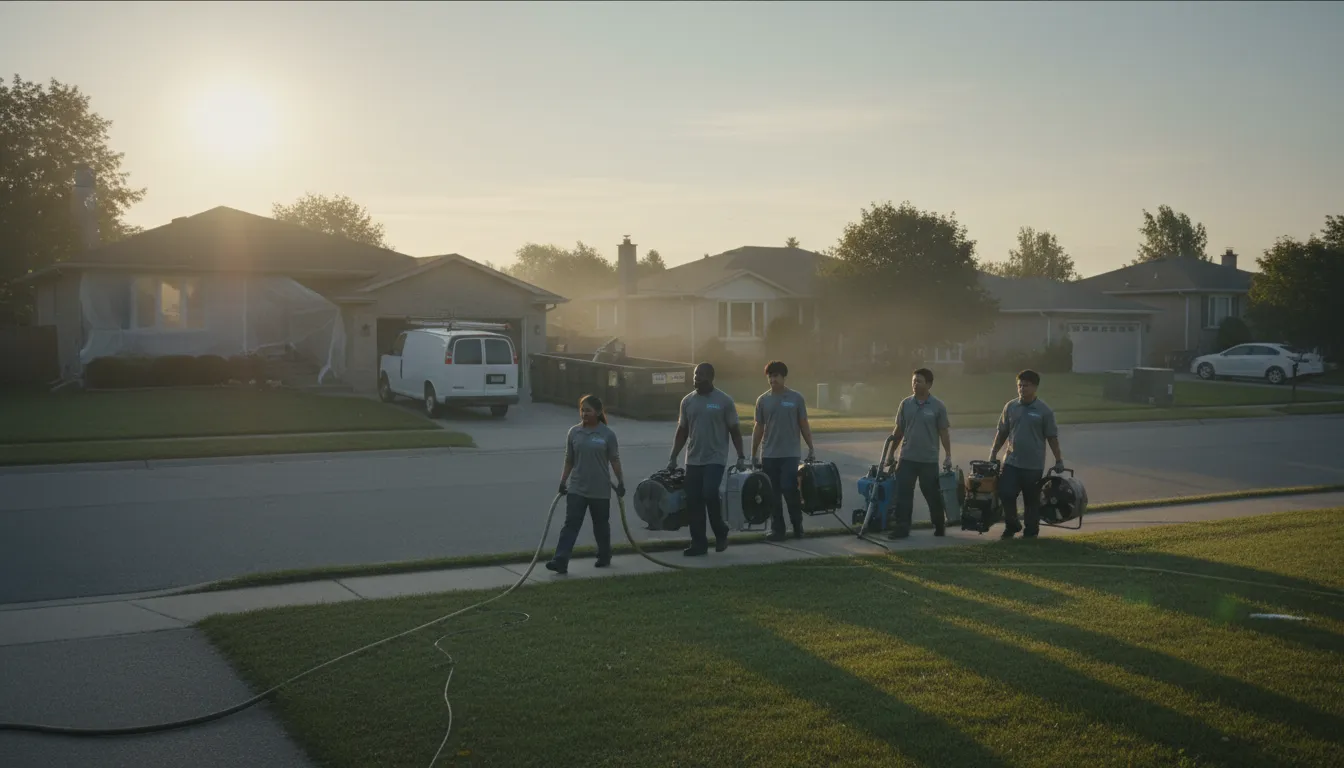
Drying equipment runs until moisture readings confirm materials are back to a safe baseline, not just until it looks dry.
Why Vaughan Homeowners Trust Our Flood Cleanup Scope
We built our cleanup process around the part most quotes skip: proving the job is actually done.
Moisture-verified completion
We don't call a flood cleanup finished until readings confirm it, not just visual dryness.
Salvage-first judgment
We tell you what can be dried and saved instead of defaulting to full replacement.
Itemized cleanup and drying quotes
You see disposal, cleaning, and drying broken out separately, not bundled into one number.
Fast crew mobilization
Cleanup starts quickly because standing water damage compounds by the hour.
GTA-specific material knowledge
We know how local flooring and drywall assemblies respond to flooding across different build eras.
Insurance-formatted documentation
Photos and moisture logs organized the way adjusters expect to see them.
Flood Cleanup Questions
How soon after a flood should cleanup start?
As soon as possible, ideally within hours. Standing water and saturated materials get more expensive to deal with every day they sit, and the risk of mould increases the longer things stay wet.
Will you remove all my flooring and drywall automatically?
No, only what the moisture readings show can't be reasonably dried and saved. We'd rather tell you a wall can be dried in place than default to demolition because it's a faster invoice.
Can flood cleanup and structural drying happen at the same time?
Yes, and in most jobs they should overlap. We often start drying equipment in unaffected-but-adjacent areas while cleanup continues elsewhere, so the whole job doesn't move at the pace of its slowest step.
What happens to items in my basement that got flooded?
We sort through affected belongings and tell you honestly what's salvageable versus what's a total loss, rather than bagging everything for disposal by default.
Do you handle flood cleanup for main-floor flooding too, not just basements?
Yes. Main-floor flooding from a burst supply line or appliance failure is scoped the same way, with moisture checks in subfloor and adjacent walls, not just the room where water was visible.
Get a Flood Cleanup Quote That Explains Itself
Email us the details and we'll scope your cleanup around actual moisture readings, not a guess.
Email Us for a Free EstimateWeather drives water-damage risk — email us if you find water.
Summer water-damage conditions in Vaughan, ON
Summer storms and high humidity around Vaughan, ON drive flash flooding, roof leaks, and the warm, damp conditions mold needs to spread fast — water damage should be dried out within 24–48 hours.
Proudly Serving Vaughan, ON
Local, on-time service throughout Vaughan and the surrounding area.